
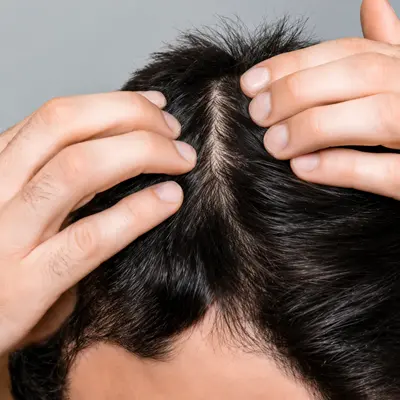
You have tried everything to stop your hair loss. Special shampoos, vitamins, oils, and massages. Nothing works. Your hair keeps thinning. Your hairline keeps receding. You do not understand why.
The cause of your hair loss is not on your scalp. It is inside your body. It is a hormone called DHT. DHT attacks your hair follicles. It makes them smaller and weaker. Eventually, they stop producing hair altogether. No shampoo or oil can stop this process.
Once you understand how DHT works, you can fight it. Medications like finasteride block DHT. PRP and exosomes can strengthen follicles that are weakened by DHT. Hair transplants move DHT-resistant follicles to balding areas.
What Is DHT?
DHT stands for dihydrotestosterone. It is a hormone. It is made from testosterone. An enzyme called 5-alpha reductase converts testosterone into DHT.
DHT is important in male development. It causes the growth of facial and body hair during puberty. It deepens the voice. It helps the male reproductive system develop.
But in adulthood, DHT becomes a problem. It attacks hair follicles on the scalp.
How Does DHT Affect Hair Follicles?
DHT attaches to receptors on your hair follicles. This triggers a process called miniaturization. The follicles shrink. They produce thinner, shorter hairs. The growth phase becomes shorter. The resting phase becomes longer. Eventually, the follicles stop producing hair altogether.
This process happens gradually over many years. You do not go bald overnight. You first notice that your hair is thinner. Your hairline may recede. A bald spot may appear on your crown.
Why Do Some Follicles Resist DHT?
Not all hair follicles are affected by DHT. Follicles on the back and sides of your scalp are resistant. They do not have DHT receptors. They continue to produce healthy hair for your entire life.
This is why hair transplants work. The surgeon takes DHT-resistant follicles from the back of your head. They move them to balding areas. The transplanted follicles keep their resistance. They continue to grow even in the balding area.
DHT and Male Pattern Baldness
In men, DHT causes a specific pattern of hair loss. The hairline recedes. The crown thins. Over time, the balding areas meet. The classic horseshoe pattern remains.
This is called androgenetic alopecia. It is genetic. If your father or grandfather was bald, you are more likely to be bald too.
DHT and Female Pattern Baldness
Women also produce DHT, but in much smaller amounts. In women, DHT causes diffuse thinning. The hair becomes thinner all over the top of the scalp. The part widens. The scalp becomes more visible. Women rarely go completely bald.
Strengthening Follicles Damaged by DH
PRP and exosomes do not block DHT. Instead, they strengthen the hair follicles. They make them more resistant to DHT’s effects. They also wake up follicles that have been miniaturized but not yet dead.
These treatments are best for early to moderate hair loss. They work best in combination with a DHT blocker.
Hair Transplant for DHT-Sensitive Follicles
A hair transplant is the only permanent solution. The transplanted follicles are taken from the back of your head. These follicles are naturally resistant to DHT. They will continue to grow even in the balding area.
However, your original hair on the top of your head may continue to thin. You may need medications to protect that hair.
Cost of DHT Blocking Treatments in Islamabad
| Treatment | Price Range (PKR) |
| PRP (per session) | 10,000-25,000 |
| Exosomes (per session) | 130,000 |
| Hair Transplant | 95,000 |
Best Doctor for Hair Loss Treatment in Islamabad
Dr. Naveed Azhar at Hair Transplant Islamabad is an expert in treating DHT-related hair loss. He prescribes medications, performs PRP and exosomes, and performs hair transplants. He creates a complete treatment plan for your specific situation.
Frequently Asked Questions
Can you stop DHT naturally?
Saw palmetto may help mildly, but prescription medications are much stronger.
Is finasteride safe?
For men, yes when prescribed by a doctor. It is not safe for women of childbearing age.
Does DHT affect women?
Yes, but in smaller amounts. It causes diffuse thinning.
Can a hair transplant fix DHT hair loss?
Yes, transplanted follicles are DHT-resistant and will last a lifetime.
Will my native hair continue to thin after a transplant?
Possibly. You may need medication to protect it.