

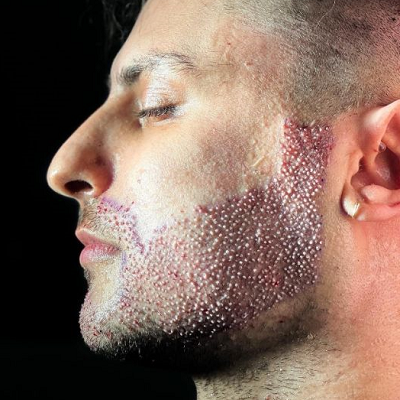
Patchy cheeks, a gap along the jawline, or a moustache that never joins the rest of your beard can make facial hair look unfinished, however carefully you groom it. Oils and trimmers can shape the hair you have. They cannot add follicles that are not there.
A beard hair transplant in Islamabad moves healthy hair follicles from another part of your body, usually the back of the scalp, into thin or bare areas of the face. This page explains who it suits, how the procedure works, how many grafts you may need, what recovery looks like, and what it costs. It is written for men in Islamabad and Rawalpindi who are considering their treatment options.
Quick Facts
| Feature | Details |
| Technique | Usually FUE (Follicular Unit Extraction), planned for each patient |
| Anaesthesia | Local anaesthesia |
| Procedure time | Several hours. Many cases take about 3 to 6 hours, depending on grafts and design |
| Recovery | Scabs and redness usually settle within 7 to 10 days. Many men return to desk work within a few days |
| Results | First new hair at about 3 to 4 months. The beard keeps maturing up to about 12 months |
| Cost | Our Cost range is PKR 85,000 to PKR 125,000. Your quote depends on graft numbers and design |
| First step | A consultation to check your donor area, set a design, and estimate grafts |
What Is a Beard Hair Transplant?
A beard transplant is a minor surgical procedure. A surgeon removes individual hair follicles from a donor area and places them in the beard region to add density, fill patches, or build a defined shape.
Most surgeons take donor hair from the back and sides of the scalp. Hair in this area tends to resist the hormone DHT, which shrinks follicles in pattern baldness. Transplanted hairs usually keep their donor traits and grow for a long time. They behave like the hair they came from, so they may look slightly different in texture from your existing beard, and the surgeon plans for that.
A transplant adds hair where it is missing. It does not change your genes or hormones, and it cannot promise a particular density.
Who May Be a Suitable Candidate?
Beard restoration can help men who have:
- Patchy or thin beard growth that has stayed the same for years, often because of genetics
- Gaps from scars caused by acne, burns, injury, or surgery, once the scar is stable
- Little or no facial hair growth from adulthood
- A clear goal, such as fuller cheeks, a joined jawline, or a thicker moustache
Your surgeon will also check these points:
- Donor hair. Enough healthy hair must exist on the scalp. Every graft used for the beard is one fewer available for scalp restoration later.
- Age and maturity. Facial hair often keeps filling in during the twenties. A younger man may be advised to wait before surgery.
- Medical conditions. Alopecia areata, a skin disease in the area, or a bleeding problem needs assessment first. Alopecia areata is not automatically a reason to operate. The cause and stability of hair loss matter.
- Expectations. A transplant builds a natural, fuller beard. It does not turn fine hair into a very dense one.
A published series of beard reconstructions using FUE treated men whose beard loss came from burns, acne scarring, and congenital absence of beard. That shows scar-related and absent-beard cases are recognised uses, though each case needs its own assessment.
What Causes Patchy Beard Growth?
Understanding the cause helps decide whether a transplant is the right fix.
- Genetics and ethnicity. These are the most common reasons for uneven beard density.
- Age. Beard density often keeps changing through the twenties and thirties.
- Scarring. Burns, deep acne, injury, or surgery can destroy follicles.
- Skin and medical conditions. Alopecia areata and other conditions can cause bare patches.
- Hormonal or general health factors. If a medical cause seems likely, your doctor may suggest tests before treatment. A transplant does not treat the underlying condition.
Which Beard Areas Can a Transplant Treat?
Surgeons can work on one area or several:
- Cheeks
- Jawline and chin
- Moustache
- Goatee (moustache and chin joined)
- Sideburns
- Scarred patches anywhere in the beard region
Small, targeted work needs fewer grafts and usually costs less. A full beard needs many more.
How a Beard Hair Transplant Works
The procedure follows four main stages.
- Design. You and the surgeon agree on the beard outline. The surgeon marks the hairline edges, cheek line, and neckline while you look in a mirror.
- Donor extraction. After local anaesthesia, the surgeon removes individual follicular units from the donor area using a fine punch tool. This is FUE.
- Graft preparation. The team sorts grafts by the number of hairs and keeps them in a holding solution until they are placed.
- Implantation. The surgeon makes tiny recipient sites in the beard area and places each graft at a set angle and direction.
FUE, FUT, and DHI for Beards
- FUE is the usual choice. It leaves tiny dot marks in the donor area instead of a linear scar, and it suits the smaller graft counts most beards need.
- FUT takes a strip of scalp and dissects it into grafts. Surgeons rarely choose it for beards because it leaves a linear scar, but it can supply many grafts in one session.
- DHI places grafts with an implanter pen. Some surgeons use it in facial work.
Your surgeon recommends one method after examining your donor area and goals.
How Many Grafts Might You Need?
Graft counts depend on how much area you want to fill and how dense you want it. Published figures vary between surgeons, so treat these as rough guides, not promises. Your surgeon gives you a count after the consultation.
| Area | Approximate grafts |
| Moustache | about 200 to 600 |
| Sideburns | about 200 to 300 per side |
| Goatee (moustache and chin) | about 500 to 1,000 |
| Cheeks | about 300 to 700 per side |
| Full beard | about 1,500 to 3,000 or more |
Four things change the number:
- Size of the area. A small patch needs far fewer grafts than a full cheek.
- Density you want. A natural beard is not equally dense everywhere. Aiming for natural density, not the maximum, protects blood supply and looks better.
- Existing hair. Thin hair already in the area counts toward the final look.
- Donor supply. Your scalp can only give a limited number of grafts over a lifetime. A surgeon who plans responsibly thinks about your future scalp needs too.
What Makes a Beard Transplant Look Natural?
Facial work is harder than scalp work, and design skill matters more than equipment.
- Angle. Beard hairs leave the skin at a shallow angle and lie nearly flat. A steeper angle looks “planted.”
- Direction. Hair on the cheek, chin, and moustache points in different directions. Using one direction everywhere is a common cause of an artificial look.
- Density gradient. Beards are usually denser at the chin and moustache and lighter near the sideburn and cheek edges. A good design fades density instead of ending it in a hard line.
- Single-hair grafts at the edges. Placing one-hair grafts along borders creates a softer edge. Multi-hair grafts go toward the centre where more density is expected.
Ask any surgeon how they plan these three things. A clear answer is a good sign.
How to Prepare for a Beard Hair Transplant
- Tell your surgeon about all medicines, supplements, and health conditions. Some, such as blood thinners, can affect bleeding. Do not stop any prescribed medicine unless your treating doctor approves.
- Follow your surgeon’s instructions on smoking, alcohol, and skincare before surgery.
- Skip harsh products on the beard area in the days before treatment.
- Eat a normal meal and wear a button-front top you can remove without touching your face.
- Plan time away from social events. Scabs and redness are visible for about a week.
What Happens on the Day
You stay awake and comfortable. The numbing injections can sting briefly. After that, most patients feel pressure or tugging, not sharp pain.
The team marks the design, numbs the donor area, extracts grafts, numbs the beard area, creates recipient sites, and places the grafts. You usually leave the same day with written aftercare instructions. Total time depends on graft numbers and design.
Recovery and Aftercare
Your surgeon’s instructions come first. This timeline shows what most patients can expect.
| When | What you may notice | What to do |
| Days 1–3 | Mild swelling, redness, small scabs around grafts | Keep your head raised when you sleep. Do not touch or scratch the area. Follow the washing instructions you are given |
| Days 4–10 | Scabs dry and flake off | Do not pick scabs. Avoid heavy sweating, gyms, swimming, and direct sun |
| Weeks 2–4 | Transplanted hairs may fall out. Skin looks mostly normal | This is expected. Ask your surgeon when you may trim or shave |
| Month 1 onward | New hairs are not yet visible | Keep your skincare gentle. Protect the area from strong sun |
Shaving, exercise, and skincare. Clinics usually advise waiting about 10 to 14 days before trimming with scissors or a guarded trimmer. They usually advise waiting several weeks before a razor, and return to heavy exercise in stages. Dates vary by surgeon, so follow the plan you receive.
Return to work. Many men return to office work within a few days. If your job puts you in front of clients, plan around the first week or two.
Contact the clinic if you notice spreading redness, increasing pain, pus, fever, or heavy swelling.
Beard Transplant Results and Growth Timeline
Results take months. The calendar below is a general guide.
| When | What usually happens |
| Weeks 2–6 | Transplanted hairs shed. The area may look the way it did before surgery |
| Months 3–4 | First new hairs appear. They may be fine and uneven at first |
| Months 5–8 | Hairs thicken and the beard fills in gradually |
| Months 8–12 | The beard reaches most of its final density and texture |
What if the hairs fall out? Shedding after the first few weeks is normal. The roots stay under the skin and new hairs grow from them. Shedding alone does not mean the transplant has failed.
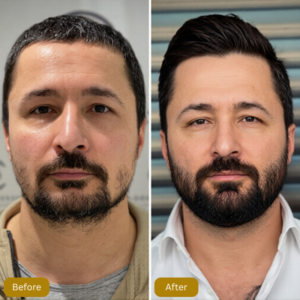
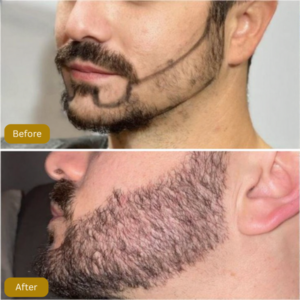
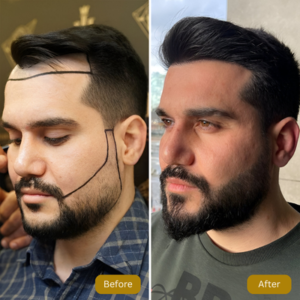
Why do the results differ? Not every graft grows. Results depend on your donor hair, skin condition, surgeon technique, how long grafts stay outside the body, and how closely you follow aftercare. No clinic can honestly promise a percentage. If density is not what you wanted, your surgeon may discuss a second session after the beard has matured, usually around 12 months.
Risks, Side Effects, and Limitations
Beard transplantation is generally safe when a trained surgeon performs it, but it is still surgery. Possible problems include:
- Common and temporary: swelling, redness, scabbing, itching, mild numbness, and shedding of transplanted hairs
- Folliculitis or ingrown hairs: small pimple-like bumps that may need treatment
- Uneven or lower-than-hoped growth: some grafts may not grow
- Donor-area marks or thinning: FUE leaves tiny dot marks that are usually hidden by hair, and over-harvesting can thin the donor area
- Unnatural result: wrong angle, direction, or density can look artificial and is hard to fix
- Infection or abnormal scarring: uncommon, but possible
Limits to understand. A transplant cannot guarantee density, perfect symmetry, or that every graft will grow. It does not treat the cause of hair loss. A beard that is thin because of a medical condition needs that condition assessed first.
Beard Hair Transplant Cost in Islamabad
Our beard hair transplant cost in Islamabad ranges from PKR 85,000 to PKR 125,000. The exact cost depends on your individual treatment plan, which our doctor will determine during a consultation.
What affects the price
- Number of grafts. This is the biggest factor.
- Size and location of the treatment area. A moustache costs less than a full beard.
- Design complexity. Multi-zone beards with fine gradients take longer.
- Technique and surgeon time. The surgeon’s involvement and the method used both matter.
- Anaesthesia, medicines, aftercare, and follow-up. Check which of these the quote includes.
Ask for a written quote that states:
- The estimated graft count and the area covered
- The technique
- Which medicines and aftercare supplies are included
- How many follow-up visits are included
- What happens if a second session is needed
Be careful with a very low price or a fixed price given without examining your face.
How to Choose a Beard Transplant Surgeon
Look at the person who plans and performs your procedure, not only the clinic.
- Who designs the beard and who places the grafts? Ask what the surgeon does personally.
- Can they show real before-and-after results for beard cases, with the graft count and months since surgery?
- Do they explain angle, direction, and density clearly when you ask?
- Do they discuss risks and limits openly, not only benefits?
- Do they check your donor supply before recommending a graft count?
- Do they give a written quote and explain what it includes?
- Is follow-up included, and who do you contact if you have a problem?
Our Treatment Process and Surgeon
At Hair Transplant Islamabad, a beard transplant starts with a consultation and ends with follow-up visits to check healing and growth.
- Consultation. The surgeon examines your beard pattern and donor area, reviews your medical history and medicines, takes photographs, and listens to your goals.
- Design and estimate. You agree on the shape and the approximate graft count, and receive a written cost estimate.
- Procedure day. The procedure is done under local anaesthesia in a sterile clinical setting.
- Follow-up. The team gives written aftercare and checks your progress in the months afterward.
Dr. Naveed Azhar leads beard and moustache transplants at the clinic. Dr. Naveed Azhar holds an MBBS degree, has fellowship training in hair restoration surgery, and brings over 22+ years of experience. He is also a member of the International Society of Hair Restoration Surgery and the Hair Restoration Society of Pakistan.
What to Expect at Your Consultation
- A review of your beard pattern, scars, and donor hair
- Questions about your health, medicines, and goals
- A design discussion, so you see how the beard may look
- A graft estimate and a written cost estimate
- An honest answer on whether a transplant suits you, and what else might help
A consultation does not commit you to surgery. If a transplant is not the right fit, the surgeon will say so.
Book Your Beard Transplant Consultation
If you are considering a beard hair transplant in Islamabad, the best next step is a personal assessment. You will get a design discussion, a graft estimate, a written quote, and an honest opinion on whether a transplant suits you.
Frequently Asked Questions
How many grafts are needed for a beard transplant?
A moustache or sideburns may need a few hundred grafts. A full beard may need about 1,500 to 3,000 or more. Your surgeon estimates the number after examining your donor area and discussing your goals.
Is a beard transplant permanent?
Transplanted hairs usually keep growing for a long time because they come from donor areas less sensitive to DHT. Results are long-lasting in most patients, but no one can guarantee density or that every graft will grow.
How long does beard transplant recovery take?
Scabs and redness usually settle within about 7 to 10 days. Many men return to desk work within a few days. Full hair growth takes months.
When will transplanted beard hair start growing?
Transplanted hairs usually shed within the first few weeks. New hairs generally appear at about 3 to 4 months. The beard keeps maturing up to about 12 months.
Can a beard transplant fill patchy cheeks?
Yes, a transplant can add hair to thin or patchy cheeks. The result depends on your donor hair, the design, and your healing. Cheek hair changes direction across the face, so the surgeon needs to plan it carefully.
Does a beard transplant leave scars?
FUE leaves tiny dot marks in the donor area, which hair usually hides. In the beard, tiny marks at recipient sites normally fade as they heal. Abnormal scarring is uncommon but possible.
When can I shave after a beard transplant?
Clinics usually advise waiting about 10 to 14 days before trimming with scissors or a guarded trimmer. They usually advise waiting several weeks before using a razor. Follow the dates your surgeon gives you.
Who is a suitable candidate for beard restoration?
Men with stable patchy growth, scars in the beard area, or little facial hair, and enough donor hair, may be suitable. Alopecia areata, a skin disease in the area, or very young age need assessment first.
Is a beard transplant painful?
You receive local anaesthesia. The numbing injections can sting briefly, then most men feel pressure or tugging. Mild soreness afterwards is common. Ask your surgeon which pain relief is safe for you.
What if my transplanted beard hair falls out?
Shedding in the first few weeks is normal. The roots stay in the skin, and new hairs grow later. Contact the clinic if you are worried or notice signs of infection.
Can I combine a beard transplant with a scalp transplant?
Some patients plan both. The surgeon has to check whether your donor area can supply enough grafts for both areas over time.


